
Automation becomes most valuable when it is almost invisible.
The customer receives a timely answer.
The campaign team begins the morning with better information.
The finance review arrives prepared.
The brand responds faster without appearing hurried.
Persistent AI agents such as Grok Bot promise to make this kind of operational fluency more accessible by carrying work across real business systems rather than stopping at recommendations.
For brand leaders, however, speed is only one part of the equation.
The deeper challenge is preserving judgment.
Efficiency Is Not the Same as Stewardship
A premium customer experience is built from hundreds of small decisions.
Which message receives a personal response?
Which complaint requires escalation?
Which campaign change is worth making?
Which exception should be granted?
Which communication should wait until a person can review the context?
Persistent AI can prepare many of these decisions quickly.
That does not mean it should own all of them.
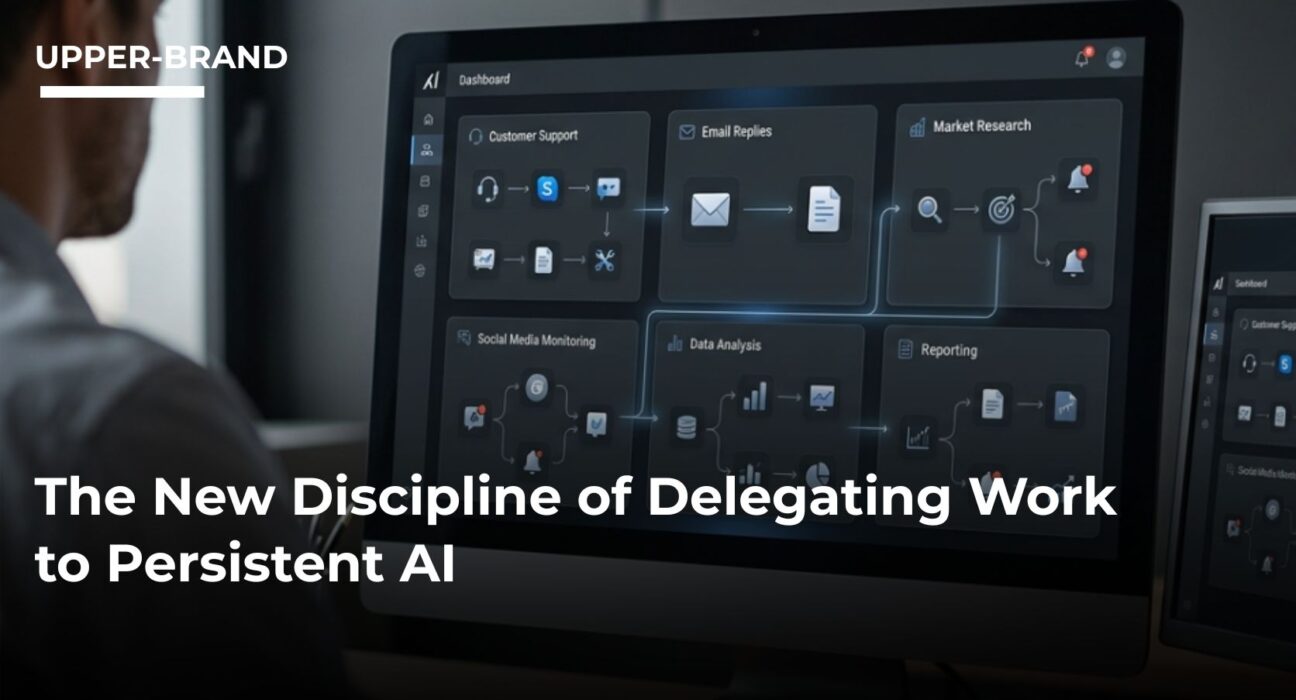
Grok Bot can research, summarize, reconcile, monitor and execute multi-step work across connected tools. A successful process can become a reusable skill and later a recurring routine.
This makes the system attractive to organizations seeking greater responsiveness.
Yet the quality of the brand experience still depends on where autonomy stops.
The First Opportunity Is Behind the Scenes
The strongest initial use cases are often invisible to customers.
Research.
Account monitoring.
Campaign analysis.
Expense reconciliation.
Daily decision summaries.
Operational issue triage.
These workflows can reduce friction without changing the customer-facing voice of the organization.
That matters because internal automation has a lower reputational cost when something goes wrong.
A flawed internal summary can be corrected.
An inappropriate customer message can become part of the relationship.
For brand-conscious organizations, this suggests a deliberate sequence: automate preparation before automating expression.
Preparation Can Improve Human Decisions
There is a tendency to judge automation only by whether a machine performs the final action.
That misses much of the value.
Consider a customer account that shows declining usage, unresolved support requests and an approaching renewal date.
A persistent agent can gather the relevant information, rank the account as a risk, summarize the evidence and prepare suggested next steps.
A relationship manager can still decide how to respond.
The agent has not replaced judgment.
It has improved the conditions under which judgment happens.
The same pattern applies to paid media, sales outreach, hiring and operations.
Good automation can make human attention more selective.
That is particularly valuable for smaller organizations where senior people often spend too much time gathering information before they can make a decision.
Brand Trust Depends on Permission Discipline
Persistent AI creates a less visible brand risk: access.
Grok Bot operates through a persistent cloud computer, and all Bots belonging to one user share that environment, including files, browser sessions and command-line credentials.
This makes work fluid.
It also means organizations should not mistake separate Bot identities for separate security boundaries.
A company that values trust should treat permission design as part of brand stewardship.
Connect only the systems required for the job.
Use restricted accounts when possible.
Remove sensitive working files after use.
Sign out of services that are no longer required.
Review accumulated access regularly.
Customers may never see these controls.
They can still feel the consequences if the controls are weak.
Human Approval Should Protect the Moments That Define the Brand
Not every decision carries equal symbolic weight.
A background reconciliation task is different from a public statement.
An internal campaign analysis is different from changing a live budget.
A draft response is different from sending it to a frustrated customer.
A product recommendation is different from authorizing a purchase.
Persistent agents can support all of these workflows, but a strong brand should define which moments require human approval because those moments shape reputation.
Grok Bot’s approval controls can help formalize that boundary.
The important point is not to add friction everywhere.
It is to reserve human judgment for the moments where the company is making a promise, taking a risk or expressing its character.
Consistency Should Not Become Mechanical Behavior
Automation often creates a tension between consistency and sameness.
A well-designed routine can ensure that a weekly report follows the same structure.
That is useful.
A customer experience should not necessarily feel like a repeated template.
Brand trust is built partly through coherence and partly through responsiveness to context.
This is why customer-facing automation deserves slower expansion than internal process automation.
The goal is not to make every interaction identical.
It is to make the operational system more reliable while preserving the ability to recognize nuance.
The Shared Computer Requires Deliberate Governance
For image-conscious or regulated organizations, the shared computer architecture deserves a specific policy.
The company should know which systems remain logged in, which files persist, who is responsible for reviewing access and how a connection is removed when a workflow changes.
The policy does not need to be bureaucratic.
It does need to exist.
Persistent access can become invisible precisely because it is convenient.
A good governance process makes that access visible again.
Cost Should Be Measured Through Experience Quality
Grok Bot access currently comes through eligible Cursor plans and linked subscription routes, with included usage resetting weekly.
This naturally encourages a cost-per-workflow analysis.
Brand leaders should add another measure: quality preserved.
A routine that saves time but creates more review, correction or customer risk may not be efficient in practice.
A less autonomous workflow that improves response speed while keeping judgment intact may be more valuable.
The right operating metric is therefore not maximum automation.
It is reliable acceleration.
Treat the Agent as a Junior Operator
The most useful implementation model resembles onboarding.
Give the agent a defined role.
Explain the expected result.
Grant only the required access.
Review early work.
Correct errors.
Expand authority gradually.
Keep consequential actions behind approval.
Measure performance.
This sequence is elegant because it matches how trust is already built inside organizations.
Technology does not remove the need for trust.
It changes the object of trust.
Persistent AI Can Strengthen a Brand When It Protects Attention
The strongest business case for persistent agents may not be headcount reduction.
It may be attention.
Senior people lose significant time to research, sorting, status gathering and repetitive preparation.
If persistent AI removes that administrative burden, more human attention can move toward decisions that require taste, empathy, negotiation, creativity and accountability.
Those are often the decisions customers remember.
The technology can therefore strengthen a brand when it is used to protect human judgment rather than replace it indiscriminately.
A More Refined Definition of Automation
The next generation of automation should not be measured by how rarely a human appears in the workflow.
A better standard is whether the work becomes faster without becoming careless.
Grok Bot and similar persistent agents make it possible to delegate more operational activity than most businesses have previously considered.
The opportunity is real.
So is the need for restraint.
The organizations that use persistent AI well will define where machines may execute freely, where they may prepare work for review and where human judgment remains part of the product.
That boundary is not a limitation on innovation.
It is the discipline that allows innovation to support trust.