
A new marketing reality is taking shape
In 2026, the most interesting brand growth stories are not coming from companies with the largest marketing departments. They are coming from small and medium businesses that have quietly rebuilt their entire marketing engine around a focused, intelligent tech stack.
What once required a team of specialists, planners, designers, analysts, and coordinators can now be achieved with a small group of well chosen tools working in sync. This shift is not about cutting corners. It is about rethinking how marketing actually gets done.
The modern SMB tech stack is lean, automated, creator friendly, and commerce aware. It is designed to move at the speed of culture, not the pace of internal approvals. And for many businesses, it is replacing entire layers of traditional marketing infrastructure.
Why marketing teams are being replaced by systems
The traditional marketing team was built for a different era. One where channels were predictable, campaigns ran in long cycles, and success depended on polished execution.
That era has passed.
In 2026, attention is fragmented across feeds, platforms, voice interfaces, and AI driven discovery. Content lives and dies in days, sometimes hours. Consumers expect relevance, immediacy, and authenticity.
Under these conditions, coordination overhead becomes a liability. What SMBs need instead are systems that compress planning, execution, and optimization into a continuous loop.
The most effective marketing stacks today do not just support teams. They replace functions.
1: AI powered personalization engines
At the core of the 2026 SMB marketing stack is AI driven personalization.
These tools analyze customer behavior across email, websites, social interactions, and purchases to deliver tailored messages at scale. Subject lines adjust automatically. Content changes based on interest. Timing aligns with individual habits.
What matters here is not novelty, but consistency. Personalization is no longer an advanced tactic. It is the baseline expectation.
For small businesses, this means one system can now perform the work that once required a CRM manager, an email specialist, and a data analyst. Messaging becomes adaptive by default.
The strategic advantage is clear. Instead of broadcasting generic campaigns, SMBs deliver relevance continuously, without manual intervention.
2: Short form video creation and distribution platforms
Short form video is the most influential brand building format of 2026. And it is no longer managed as a creative experiment.
Modern video tools allow SMBs to script, edit, caption, publish, and repurpose content across platforms with minimal effort. Performance data feeds back instantly, guiding what gets produced next.
These systems replace entire creative workflows. No production team. No post production handoffs. No lengthy revisions.
The result is not lower quality. It is higher velocity.
Brands that win with short form video do not obsess over perfection. They focus on presence. Founder voices, product demos, customer moments, and behind the scenes content move faster and feel more human.
In this environment, speed and clarity outperform polish.
3: Creator and nano influencer collaboration platforms
Influencer marketing has matured into a discipline that rewards structure.
In 2026, SMBs are using platforms that manage creator discovery, outreach, collaboration, approvals, and performance tracking in one place. These tools are especially powerful for working with nano influencers and local creators.
What used to require an agency or a dedicated manager is now handled through a streamlined system. Brands identify creators aligned with their values, manage partnerships efficiently, and measure impact based on real outcomes rather than follower counts.
This approach replaces traditional brand ambassador programs and paid endorsement campaigns. It also shifts influence from spectacle to credibility.
For SMBs, creator platforms are not about amplification. They are about trust at scale.
4: Social commerce and in feed checkout systems
The line between marketing and sales has effectively disappeared.
Social platforms in 2026 support full commerce experiences. Product discovery, education, and purchase now happen in the same environment.
SMBs are adopting tools that integrate catalogs, inventory, payments, and fulfillment directly into social feeds. A short video is no longer just content. It is a storefront.
This replaces entire funnel structures that once required landing pages, optimization specialists, and conversion teams. Friction is removed. Intent is captured immediately.
For mobile first audiences, this matters deeply. Every eliminated step increases the likelihood of conversion.
Social commerce tools allow SMBs to monetize attention without building complex infrastructure.
5: Predictive analytics and performance optimization systems
The final pillar of the 2026 SMB tech stack is predictive analytics.
These tools go beyond reporting. They identify patterns, forecast outcomes, and recommend allocation decisions based on live data.
Instead of waiting for campaigns to end, businesses adjust in real time. Content that performs well is amplified. Channels that underperform are paused. Budgets follow results, not assumptions.
This replaces the role of traditional performance analysts and quarterly reviews. Decision making becomes continuous and evidence based.
For SMBs operating with limited budgets, predictive insight is not a luxury. It is protection.
How these tools work together as a system
What makes the 2026 tech stack powerful is not the individual tools, but their integration.
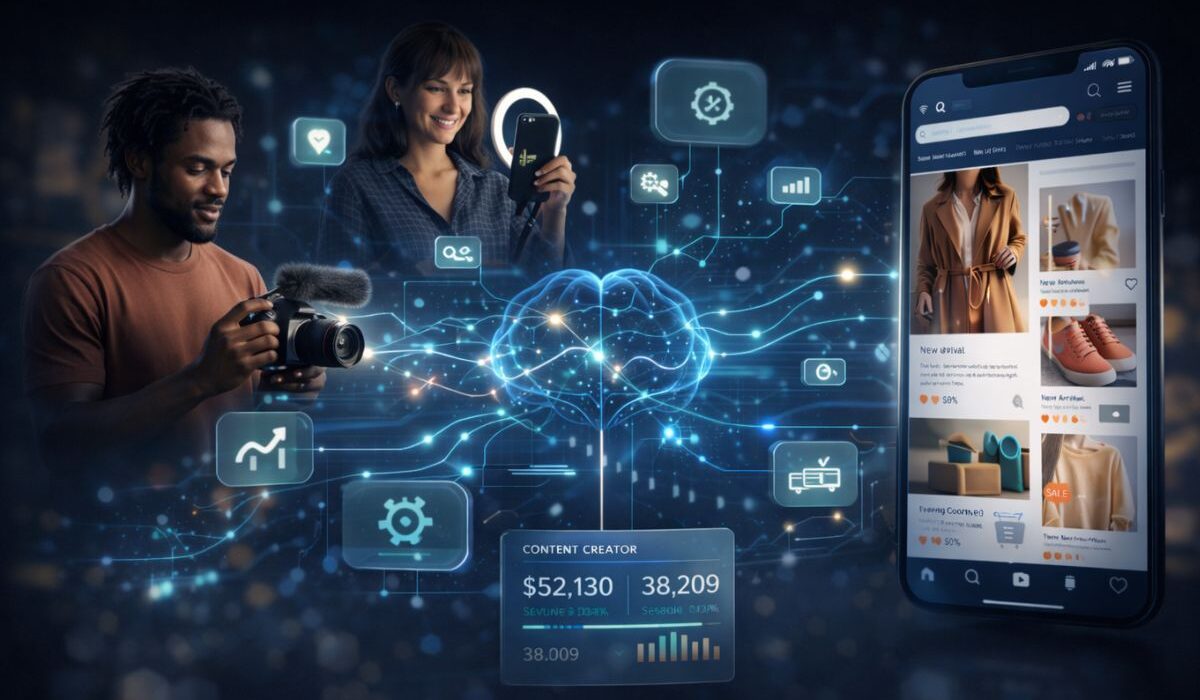
AI personalization informs video messaging. Video performance guides creator partnerships. Creator content feeds social commerce. Commerce data powers predictive analytics. Analytics refine personalization.
This closed loop replaces fragmented marketing operations with a single growth system.
When designed intentionally, the stack becomes self reinforcing. Learning compounds. Execution accelerates. Waste declines.
Marketing becomes less about campaigns and more about momentum.
What this means for brand building
The rise of system driven marketing has changed how brands are built.
In 2026, brands are shaped through repeated micro interactions rather than big launches. Consistency matters more than spectacle. Tone matters more than slogans.
SMBs that embrace this model develop stronger brand identities because they are present where customers already spend time. They speak in human voices. They adapt quickly.
The tech stack supports this by removing friction and amplifying what already works.
Why this favors small and medium businesses
Large organizations struggle to adopt this model because it conflicts with their structure. Approval layers slow execution. Risk aversion limits experimentation. Legacy systems resist integration.
SMBs, by contrast, are structurally aligned with this approach. They move fast. They decide quickly. They can test without fear.
The modern tech stack rewards those qualities.
In 2026, marketing advantage is no longer tied to headcount. It is tied to system design.
The hidden benefit: focus
Perhaps the most important outcome of this shift is focus.
When tools replace complexity, founders and teams regain time and mental space. Strategy improves. Storytelling sharpens. Customer relationships deepen.
Marketing stops being a drain and becomes a signal. A reflection of how clearly a business understands itself and its audience.
That clarity shows up everywhere.
A glimpse into the future of SMB growth
The 2026 SMB tech stack is not a temporary workaround. It is the blueprint for the next phase of brand growth.
AI will continue to improve. Commerce will continue to collapse into content. Creators will continue to influence purchasing decisions. Data will continue to guide execution.
The businesses that thrive will not be those that add more tools, but those that assemble the right ones into a coherent system.
Five tools. One integrated stack. Infinite leverage.
This is how small businesses are replacing marketing teams and building brands that move faster than the market itself.